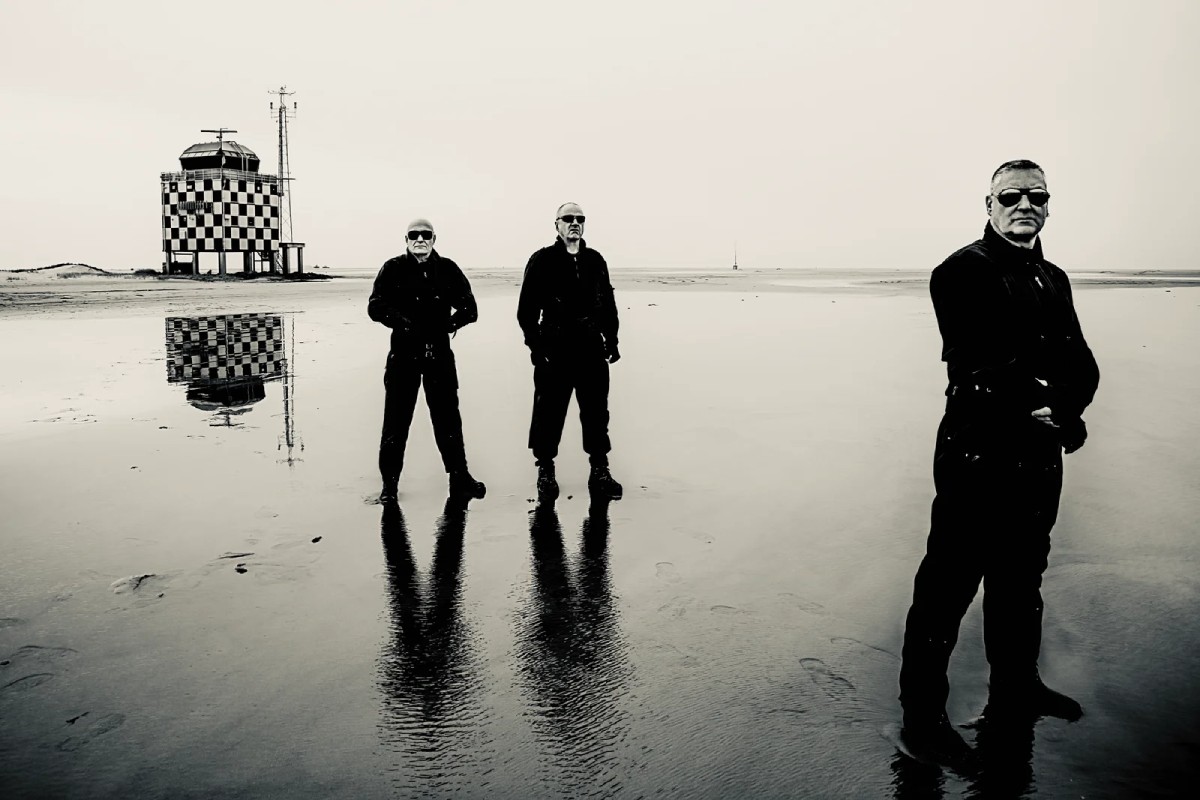
I can’t recall the first time I heard a Front 242 song. It might have been “Headhunter,” when its surreal Anton Corbijn music video played on MTV’s 120 Minutes. Or maybe it was “Welcome to Paradise” blasting from Hell’s speakers at Masquerade, where I earned my baby bat wings. I do know that by the time I got to college, I owned their entire discography to date, collected one CD at a time from Wax n Facts records in Little Five Points. It was the first time I’d ever gone all in on an artist.
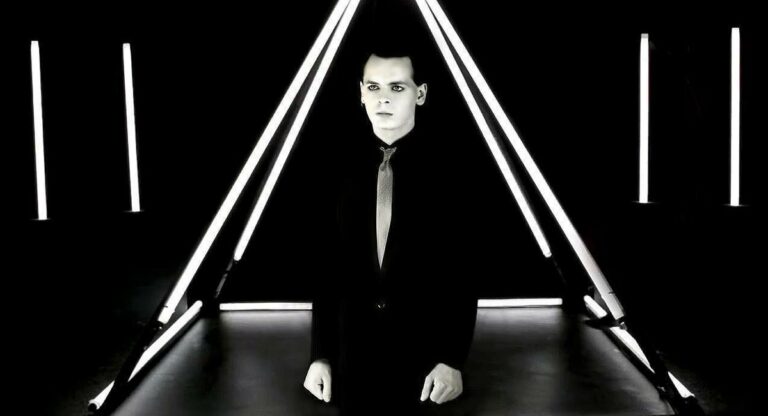
Those five albums—from 1982’s Geography through 1991’s Tyranny (For You)—not only soundtracked my formative years, they defined Electronic Body Music and rewired the future of electronic music. Few names command as much reverence in the goth-industrial scene as Front 242. Their muscular beats and militant chants pulse through generations of electronic artists, from Nine Inch Nails to VNV Nation, from Boy Harsher to countless others.
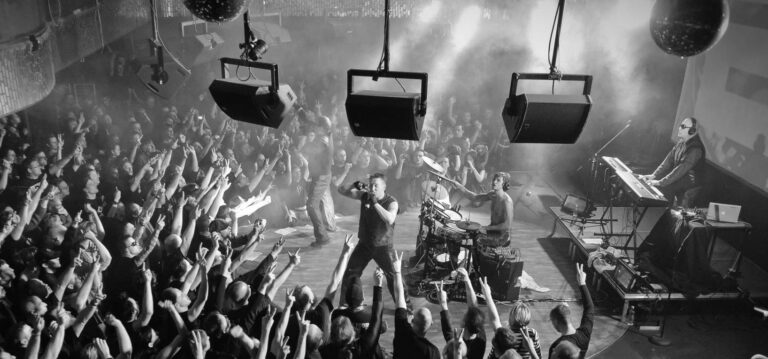
Front 242 haven’t released any new material since 2003’s Pulse, though they’ve spent much of the last two decades touring and headlining festivals around the world. I’ve had the honor of seeing them at least four times, beginning with their 1993 Lollapalooza set and ending with their 2022 headlining slot at Cold Waves X. In 2025, Front 242 officially retired from touring. They are, after all, in their late sixties and early seventies, and a 242 performance is grueling work.
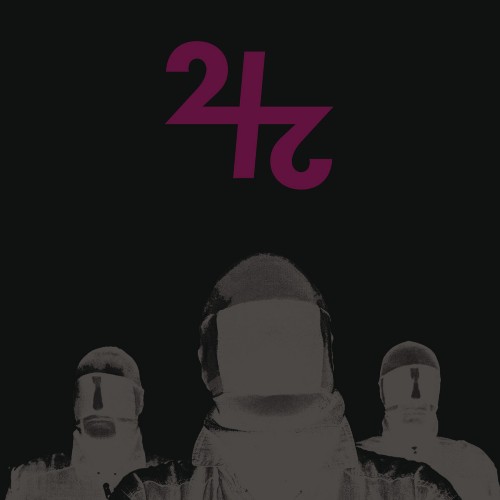
This month, Front 242 will put a bow on a nearly 50-year career with one final, unexpected release, a live album called Black Out that captures one of their last performances. Black Out was recorded in January 2025 in their hometown of Brussels and contains live versions of their classic songs—”Quite Unusual,” “Tragedy for You,” and of course “Headhunter”—as well as the first official release of three previously unreleased songs.
When Alfa Matrix announced Black Out, I reached out to Front 242’s representatives on the off chance the band might be available for interviews. The scream I scrumpt when an absolute legend in electronic music, 242’s Patrick Codenys himself, responded to my email and agreed to answer my questions. Here’s what Patrick told me about the live album, their legacy, and the state of EBM.
Black Out captures one of Front 242’s final performances. What feeling or emotion do you want the album to preserve?
We hope this album serves as a sort of final gift to all the people who have supported us over the years. We are very grateful to our fans, who have given us so many wonderful moments.
For future generations, it will stand as a testament to what Front 242 was and the energy we generated throughout our live career.
The album includes the first official release of three songs: “Generator,” “Fix It,” and “Hide & Seek.” Why have those songs remained unreleased until now, and did you ever consider releasing studio versions?
These 3 to 4 tracks (including “Deeply Asleep,” which we’ve played at some shows but isn’t on the live album) might be released as an EP in the future. They were originally created to add some fresh material to our set. We started with demo versions, refined them after playing them live, and finally made them a permanent part of our setlist.
The music world looks completely different from when Front 242 started. Looking back over the last 45 years, what change had the biggest impact on you as an artist?
I would say… laziness. In the 1980s, electronic music artists spent a lot of time experimenting with synthesizers, doing research, exploring different synthesis techniques such as analog, digital, algorithmic, and virtual. Later on, factory sound banks became the norm, followed by the recycling and sampling of existing music sequences, and finally, the ultimate form of recycling and laziness: AI.
The real positive aspect over time is the mixing and production, which has seriously improved, as has the quality of live sound systems.
After a career this long and influential, are there any ideas, projects, or ambitions that still feel unfinished? Is there something Front 242 always wanted to do but never had the chance?
On my part, to explore movie soundtrack music, which has become a powerful, high-quality sound and music genre. When I listen to certain TV series soundtracks on headphones, I’m impressed by the sound work. It blends the raw sounds of on-screen events with musical sequences to create an extremely rich atmosphere.
Front 242 helped define Electronic Body Music, which has evolved in many different directions. What do you make of the genre today? Are there new artists or projects you think are pushing it forward?
Most EBM music has become a formula. There is less experimentation in sound design or a willingness to take risks. Nevertheless, the genre retains that dark vibe and traces of the energy inherited from punk.
Lately, I’ve been enjoying projects like Sierra Veins, Emmon, and Boy Harsher.
Front 242 are often described as pioneers, innovators, and architects of electronic music. When you think about the band’s legacy, what do you personally hope people remember most?
That the band laid the groundwork for its own unique musical style as early as 1983 with Geography, an album that already encapsulates the entire future of our story.
Machines, technology, and innovation have always been central to Front 242’s music. Today, AI tools can refine song lyrics and melodies, even generate entire songs from a written prompt. As someone who helped push the boundaries of electronic music, how do you feel about this kind of technology?
Like I mentioned above, recycling versus creativity.
I would advocate for the creation of a “created without AI” label (similar to the “organic” label in food) that would allow people to appreciate work that appeals to our human senses and sensibilities.
Now that Front 242 has stepped away from live performance, what are you giving your time and attention to? What media or creative projects excite you?
In music, I work on personal projects, research, production, and remixes. In my free time, I enjoy long walks in nature with my dog.