
When you think of Faderhead, do you think party animal? Yes, the German musician’s early days are defined by a party-hard persona and undeniable club anthems like the stone-cold classic “TZDV.” In 2011, he published a guide called “How to Hang With Faderhead” that ruffled a few feathers. He’s also famous for an impressive, gravity-defying mohawk.
But that’s just half the story.
Faderhead is thoughtful about the choices he makes and conscious of the world surrounding him. In 2021, for instance, he turned down a lucrative show because the lineup included an artist known for their fascist imagery. That thoughtful side comes through in his music, too. He’s a versatile songwriter who produces sensitive, introspective songs like “Horizon Born” and “Breathe Again” that complement his party anthems. He also creates cohesive albums like Asteria and Years of the Serpent that tackle crucial subject matter and reflect personal growth.
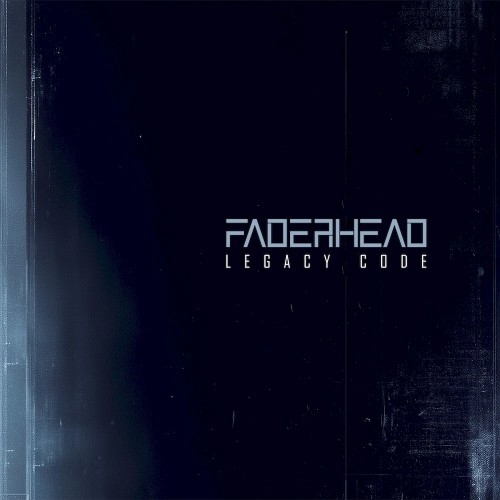
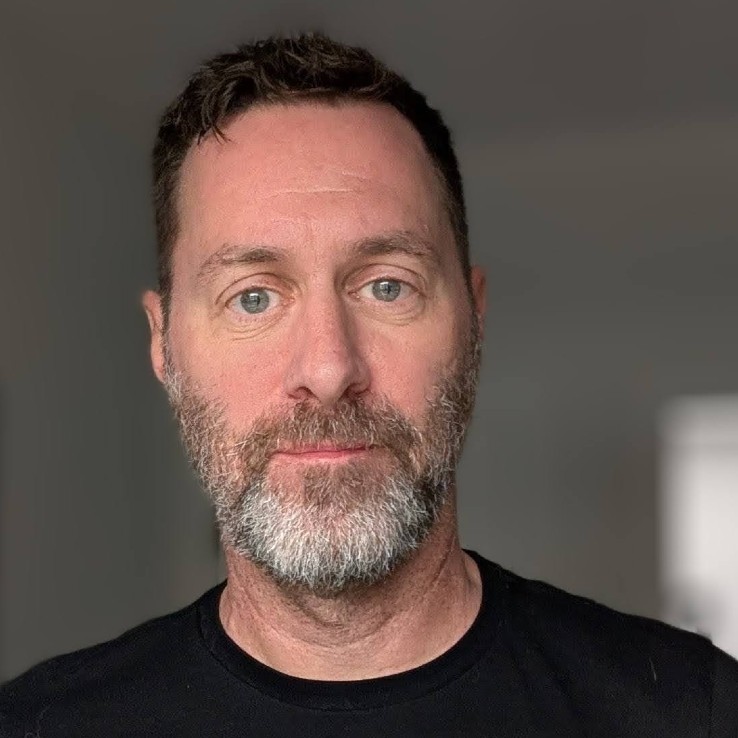
These days, he doesn’t even party that much, though he’s still fully capable of making hard-charging club bangers like his new single, “Lethanox.” As he prepares to release his twelfth album, Legacy Code, I reached out to Sami, the man behind Faderhead, to ask him about the new album, his persona, and who he is today. Here’s what he told me.
In 2024, you released one song every month, which is a singles-era trend that other artists like Aesthetic Perfection and most recently j:dead have done. What did you learn from it? Would you do it again?
I actually didn’t learn that much from it. Unlike Daniel or Jay, I’ve been releasing a song per month every single month on my Patreon since 2017(!). These songs were in addition to my regular releases and exclusive to my Patreon supporters, so they didn’t show up on Spotify. But that means I have had a lot of practice writing and releasing very regularly for a long, long time. So from that point of view, it wasn’t anything new for me, and I’ve continued releasing one song per month on Patreon since then.
The thing I did learn was that the regular release cadence did not help with the Spotify algorithm. That was the initial theory which floated around the internet: “Bands who release every 28 days get a boost from the Spotify algorithm,” which both Daniel and I did not see happen. We talked about it a while ago, and we both saw no meaningful jumps in listenership from the monthly release rhythm. Maybe my songs were just not good enough, who knows.
Legacy Code is your first full-length album since Years of the Serpent. Why return to the album format? Is the album format still valid?
I am releasing Legacy Code to have a milestone marker for the first 20 years of releasing albums. My debut album FH1 came out in 2006, so I thought it was fitting to end this chapter with a full album.
The question of the validity of the album format is a nuanced one: if you are an artist who is new, with a young fanbase, you probably do not need to make albums. Because none of your fans will have the attention span to even listen to half of an album. They also have totally different listening habits. If your fanbase is in their 40s and belongs to a niche scene where albums are still a thing, then yes, it makes sense to do it.
The same type of distinction has to be made for the type of music you make. If you make techno or other type of electronic dance music with a progressive build structure, then nobody needs an album from you. They never did. Not even in 1995, which is why there are very few techno albums. But if you do more song-oriented music—and by that I mean music that has vocals, lyrics, verse/chorus structure—then maybe an album works because you won’t have the same type of techno track 12 times in a row.
In my case, I tend to have four to five different styles of tracks, most of which have a normal song structure with verses and choruses. Plus, my audience is mainly in the 30 to 50 age bracket, so doing an album still made sense.
You’ve described Legacy Code as building on old habits. What are some things from the early Faderhead days that still work?
I’m not sure I would say it like that. “Legacy code” is a term from software engineering, where old code is both the basis of everything and at the same time the reason for many of the issues and problems that are coming up. Every good software engineer usually wants to delete it all and start over with clean, well-documented code, but that’s just not possible because nobody really knows what’s going on in the backend, and tearing everything down would take way too long and bring the whole thing down.
The longer I make music, the more I notice that—despite the efforts to improve and change—basic building blocks in my songwriting stay the same. Simply because they are what I like to hear myself. And it’s interesting to note that whenever I try to break out of those structures, things seem forced to me. My Patreon is a kind of experimental lab for this. The members there do not expect a dance banger every month. They enjoy me experimenting with acoustic guitar ballads or other types of stuff that I don’t do in official Faderhead releases. But funnily enough, the songs that I perceive to be strongest are usually the ones that follow the same structures that I always use. I’m not sure why that is.
The Faderhead things that still work from the early days are my focus on catchiness. While all of the songs on FH1 are WAY too long from today’s point of view, they are still very hooky. And that is still the same today. Simply because I like it that way.
On Asteria, you wanted to “murder everything I am.” Now you’re talking about why we can’t start over. What changed? Do you see earlier versions of yourself differently now?
I am not saying we can’t start over. We absolutely can, and I definitely did. I am a very different person than I was in 2018/2019 when I wrote the Asteria album. We can start over every day if we want to. But we have to be very specific and intentional about why and how we do that.
Plus, change is usually not something we can do well on our own because every person usually thinks that they are doing the right thing from their perspective. So having someone else (like a therapist) mirror your actions is very important.
“Lethanox,” the first single from Legacy Code, is a word you invented, right? I believe it’s a portmanteau of “lethal” and something else? What does it mean, and how did it come about?
“Lethanox” is a word I came up with because I didn’t want to have a long, convoluted title like “the night I thought I was going to die.” It’s a blend of two parts:
Letha- comes from lethal (deadly). That word traces back to Latin letalis, which comes from letum, meaning death. -nox is Latin for night.
Combined meaning: “deadly night” or “the night that kills.” The -al of lethal is dropped so the two parts fuse into one word.
I had six years of Latin in high school along with English and French, and a lot of it stuck. So to me, it was a pretty obvious combination.
I think you’re a really introspective artist, and some of my favorite Faderhead songs show a lot of vulnerability. But you’re probably best known for your party songs. Do people underestimate Faderhead?
I would say yes, they definitely do. But part of that is also my own fault because in the first 10 years, the party thing is what I mostly promoted.
At the same time, I absolutely understand why music fans expect just one thing from an artist: if you are in the mood for Slayer, you put on Slayer and you don’t suddenly want Slayer to play a poppy acoustic ballad. Because you were in the mood for classic thrash metal! So it makes sense that people just want another club banger from me. Also because I’m pretty good at making them. 🙂
I don’t see it as much anymore, but you’ve faced a lot of criticism for your party songs. You’ve been called “bro-dustrial.” Does that stuff ever get to you? How do you handle it?
Back then, it annoyed me more than it does today because it mostly came from complete losers who sat in their mom’s basement and were angry that I brought “commercial music” to their corner of the world.
Today, I understand it from their point of view because I really didn’t conform to the goth stereotypes of the time, which was a blessing and a curse for me. A blessing because it means I stuck out a lot and was easily recognizable. A curse because a bunch of people thought I was “destroying the scene” and spilled a lot of hate on the web.
These days, if it happens, it’s usually from faceless accounts that post almost random-looking comments, which might as well be bots. I think the dark electro/goth/industrial scene has also accepted that I do what I do. We are now playing headline shows to 600 to 800 people, and I have 200,000 monthly listeners on Spotify, which is 3 to 10 times what most dark electro scene bands have. So I guess there’s no point anymore in yelling “nobody is listening to Faderhead” on the internet. 🙂
We’re approaching the 20th anniversary of “TZDV,” which is on a lot of lists of overplayed club songs alongside other classics like “Dead Stars” and “Military Fashion Show.” How do you feel about “TZDV” today? Does it still hold up?
Yeah, it absolutely does. Unlike “Dirtygrrrls/Dirtybois,” which I can’t listen to anymore. “TZDV” also still works as a closing song at every show even if we’ve played 25 other bangers before it.
You and I both turned 50 recently. I don’t feel that much different, though I can’t run as fast and my back hurts after a night out dancing. How does 50 feel to you?
I am turning 51 this month, and I feel pretty good. I can’t recover from partying anymore, so I just don’t do it. I also don’t see the appeal anymore of spending a night in some bar or club yelling at people over loud music while drinking booze I don’t even like anymore. So if I go out, it’s usually to dinner with friends or to go to a show of a band I know. And then I just sit backstage and hang out with them because that’s the main reason for me to go.
Since Covid, I’ve put on too much weight, and I am finally getting around to slimming down again. Still got 5 kg/10 lbs to go, but I am not in a hurry. Luckily, I like going to the gym and always have a yoga mat lying on the floor of my studio, so I just get up every hour or so, do some stretches and some pushups or other exercises to keep me moving. Otherwise, all the sitting would totally kill me.
But yeah, overall I feel pretty good, and my energy on stage is higher than it ever was. I’ve always tried to have younger musicians in my live band because it forces me to keep up with them. I don’t want to look like the tired old dude next to a bunch of 30-year-olds.