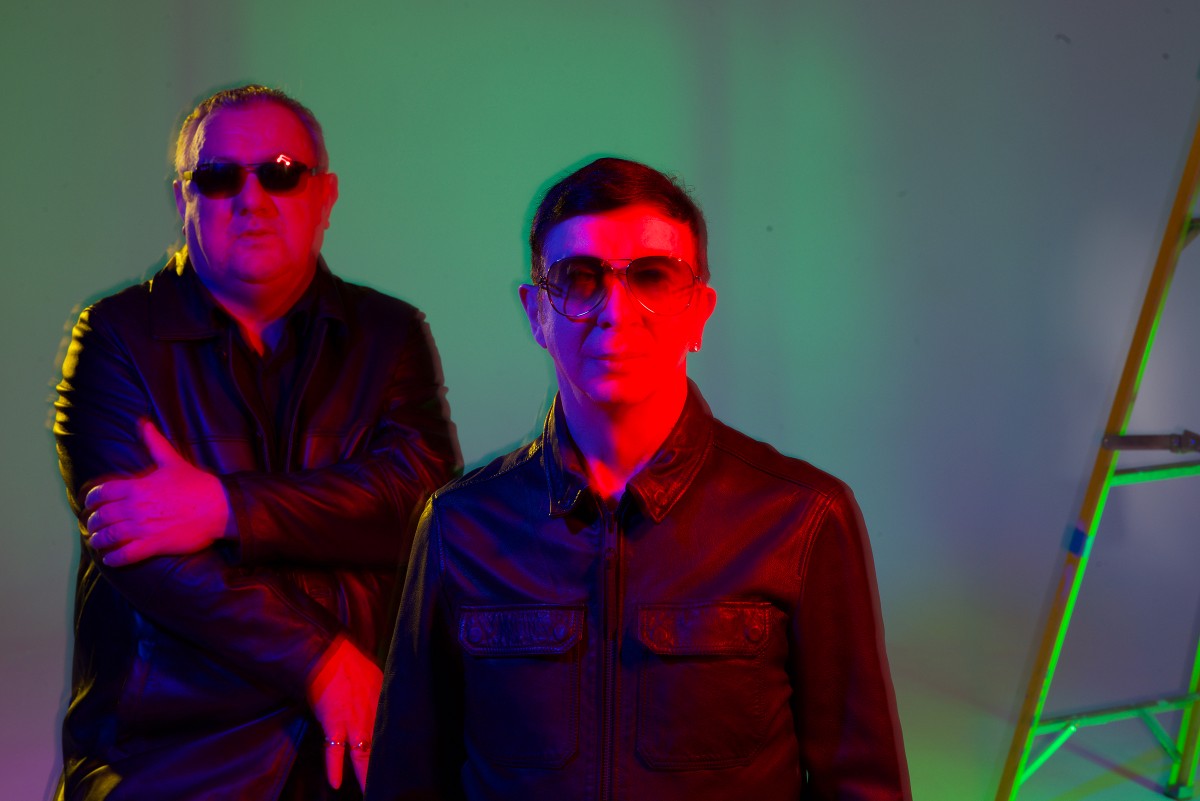
Marc Almond has spent more than four decades at the center of electronic pop as the unmistakable voice of Soft Cell.
Last month, the legendary synthpop act released their sixth and final studio album, Danceteria, a love letter to 1980s New York. The record was completed in October 2025 just days before the death of Marc’s longtime musical partner Dave Ball, which adds unexpected poignance to its stories of nightlife and friendship.
Soft Cell’s musical output may have ended, but the it’s not the end of Soft Cell just yet. Marc continues to perform live with Dave’s coproducer Philip Larsen. They’ll play a handful of shows in the United States this November:
- Nov. 8 — San Diego, CA — The Magnolia
- Nov. 11 — San Francisco, CA — The Regency Ballroom
- Nov. 14 — Huntington Beach, CA — Darker Waves Festival
I recently had the chance to send Marc a few questions about Soft Cell and their final album. Here’s what he told me.
Danceteria is such a vivid record. It’s euphoric, fun, nostalgic, a little bit seedy. What do you hope people feel when they listen to it?
Though it has some poignant, sadder, and darker moments, I hope ultimately it’s an uplifting record. It has more poignancy, of course, because of Dave’s passing just as the record was finished. Maybe that adds to the emotional feel of the record, because I hope it is a record of high emotion.
It’s also very clearly a love letter to New York in the ’80s—the good, the bad, and everything in between. What was so special about that era for you?
It was a time of such intense experiences. We discovered what we wanted to be musically as a duo, and we grew as people too.
My New York was Atlanta, and my Danceteria was the legendary 24-hour nightclub Backstreet. I can get very nostalgic talking about it. But I don’t think I appreciated at the time how much it was shaping me. Did you know then how important Danceteria would be to you, or did that come later? What do you wish you appreciated more at the time?
I think we really did appreciate Danceteria at the time. We made the most of those early visits to New York, recording three albums, taking in as many experiences as we could, and exploring all we could. We were there for a good period of time and made many friends. Those memories were still so vivid while making this record.
I’m an after-hours guy, so some of my favorite moments on Danceteria are the dark, trancier songs near the end, “What Is Your Morality” and especially “Losing Yourself.” There’s a dangerous current running through those songs. How important was it to capture the darker side of those nights alongside all the fun and excitement?
I imagined the album was, in some ways, a journey through a New York City night, and those songs were where the night gets dark, messy, and druggy. Then the early-morning loneliness of “After Hours” dawns, and it all comes full circle with waking up and grabbing some coffee in “Wave to America.” But with “Out Come the Freaks,” it starts all over again.
How strange is it that Madonna also has a song out this summer called “Danceteria”? What did you make of her take? Do the people and details she sings about reflect your Danceteria experience?
It’s a bit strange, really. We announced our album long before hers came out with that track, and I didn’t see it on an earlier tracklist, but I like her take. I guess it’s her territory. It’s different, and she namechecks different people from her own connections. It’s a bit odd, though, that she later did a remix, “Danceteria After Hours,” which is the name of another track on our album. Zeitgeist and coincidence, I guess. And she has the algorithm, so she’ll be at the top of every Google search.
Electronic pop has always seemed to attract gay artists and audiences, in the ’80s and still today. What is it about synthesizers and drum machines and pop melodies that speaks so strongly to LGBTQ people?
I think it’s the euphoric, spacey sounds and hypnotic dance beats, I guess. It’s the sound of escapism and hedonism, taking you away from your life. But it’s also the sound of the night and the city, where queer people have always felt at home. When there’s an emotive vocal with a cold machine backing, it’s a wonderful, heady mix. I’m thinking of Donna Summer singing “I Feel Love.”
What song in the Soft Cell catalog means the most to you now? Has it changed over the years—or has it always been that one?
I think probably “Say Hello, Wave Goodbye.” It’s the moment when the crowd takes over the song. In Europe and the UK, it’s more popular with the audience than “Tainted Love.” It doesn’t mean so much in America. There, it’s “Tainted Love” and “Sex Dwarf.”
I was very sorry to hear about Dave’s passing. There’s a line in the classic track “Memorabilia” that feels especially poignant now: “Everywhere I go, I take a little piece of you.” What pieces of Dave do you carry with you?
Well, he left me some great music and a legacy. It’ll literally always be mostly Dave’s music that people hear onstage, as he programmed all the tracks. Philip Larsen, who’s been our second keyboard player for quite a few years now, adds a lot into the mix live. Philip co-produced the tracks with Dave.
Danceteria takes us through a night out in New York in the ’80s. What does a night out for Marc Almond look like now?
I’d like to tell you it’s still living wild, and though I still like to dance, it’s more often a glass of milk and an early night.